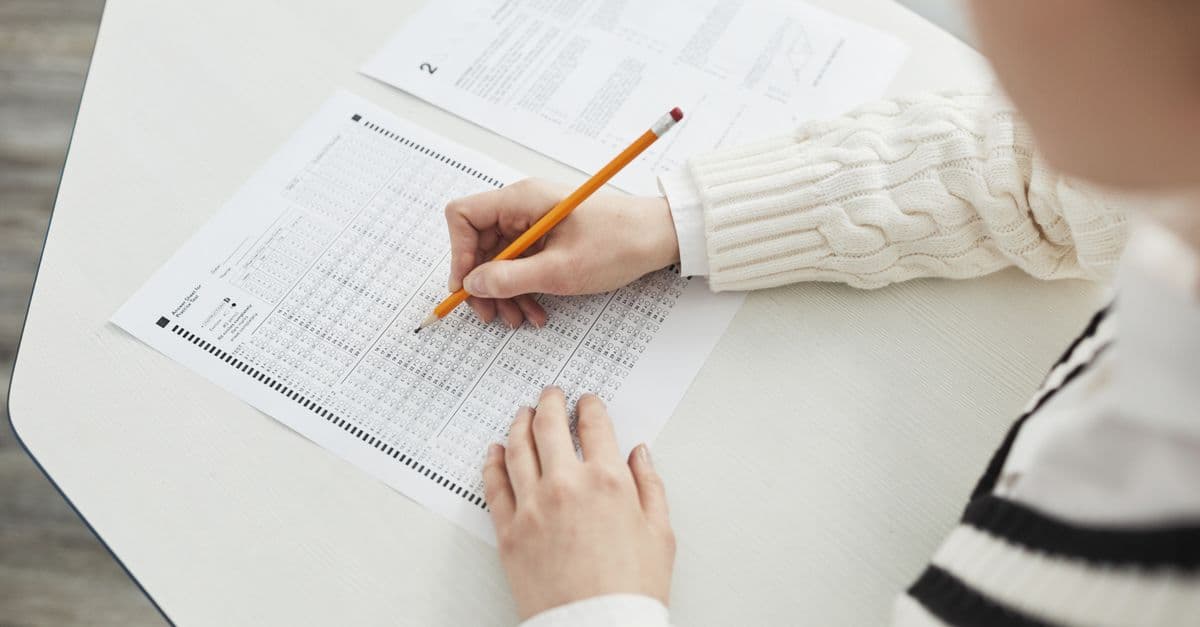
Almost all dMAT preparation assumes the exam runs the way it is supposed to. You practise the questions, rehearse the timing, and picture a quiet room with a machine that behaves. Usually that is what you get. But a computer-delivered exam has more moving parts than a paper one, rooms full of people are never perfectly quiet, and bodies choose their own moments. The candidates who cope best with a disrupted sitting are not the calmest by temperament. They are the ones who decided in advance what they would do, so that the decision does not have to be made while the clock is running.
The rule that covers most of it
Whatever goes wrong, tell the invigilator, and tell them at the moment it happens.
This sounds obvious and is routinely ignored. The instinct in an exam room is to keep your head down — to assume the problem is somehow your fault, that raising it will cost more time than absorbing it, or that making a fuss will count against you. None of that holds. Invigilators are in the room precisely for the things that do not go to plan, and a problem reported while it is happening can usually be dealt with in a way that the same problem reported on the way out cannot.
So raise your hand for anything that materially affects your ability to sit the exam: the screen, the room, your health, an instruction you cannot make sense of. Let the person whose job it is decide whether it matters. What you should not do is try to fix a technical problem yourself, or work around it silently for twenty minutes and mention it afterwards.
What happens next — whether a session can be paused, restarted or noted for later review — is set by the test provider, not by anything you can read here. Find the current procedure in the official sources and your participant portal before test day, and write it into your test-day checklist alongside the rest of your logistics. On the day you then follow a process instead of inventing one.
When the machine misbehaves
The dMAT is delivered on a computer, which introduces a category of problem that simply does not exist on paper: a screen that freezes, an interface that stops responding, an item that will not register your selection.
Two things help here. The first is knowing what normal looks like. If you have only ever practised on paper, you have no baseline, and every hesitation of the interface reads as a fault. Working through timed sets on screen — a full free dMAT diagnostic is a reasonable stand-in — teaches you the difference between software that is thinking and software that has stopped.
The second is to resist troubleshooting. Do not click repeatedly, do not attempt to refresh, do not go looking through menus. Beyond wasting the minutes you are trying to protect, you no longer know what state your answers are in. Stop, raise your hand, and describe what you saw as precisely as you can: which question, what you clicked, what the screen did.
While you wait, keep the problem contained. Note the item number you were on and the reasoning you had already done, so that when the exam resumes you restart from where you were rather than from the beginning of the question.
When your body or your attention gives out
Illness, a headache, a coughing neighbour, a room that is too cold, a sudden need for the washroom — these are less dramatic than a technical failure and, minute for minute, they cost more, because they tend to be endured rather than reported.
Draw the line at whether the problem is going to persist. A moment of nausea that passes is yours to manage. A room you cannot concentrate in, or symptoms that are getting worse, is worth mentioning, and the same rule applies: say so while it is happening. On washroom rules and what is permitted between the two modules, follow the official guidance and plan around it in advance, as our note on using the break between modules sets out.
Then there is the disruption that comes from inside. You realise you have misread an instruction, or that you have spent nine minutes on one item, and the panic arrives. That is a familiar failure and it has a familiar remedy: a short, rehearsed reset — hands off the desk, three slow breaths, eyes off the screen for a count of ten — before you touch anything else. Our guide to managing test-day anxiety covers the routine in full. The reset is worth practising precisely because you cannot invent it under load.
When you have lost time
Whatever the cause, the recovery is the same, and it is not to speed up uniformly across everything that remains.
Take ten seconds to look at what is actually left: how many items, how many minutes. Then triage. Answer the questions you can finish quickly, mark the ones that need real work, and give whatever is left to those in order of how likely you are to get them right — not in the order they appear. If the marking scheme for your sitting confirms there is no penalty for a wrong answer — check that on the official sources rather than assuming it — then an unanswered item can only score zero, so make sure everything has something recorded before time is called. This is ordinary pacing discipline applied to a shorter runway.
The one thing not to do is carry the lost time forward. The Core module's subtests are timed separately, and a bad ten minutes in one of them has no mechanical effect on the next. It has an effect only if you let it, by rushing a subtest that was going perfectly well out of a sense of debt.
Rehearse the recovery, not just the exam
None of this needs much practice, but it needs some, and the place to get it is a full-length mock rather than the exam itself. When you next sit one, deliberately break it: stand up mid-section, let something interrupt you, and then practise resuming from a specific item rather than restarting your concentration from scratch. If you already build realistic exam conditions into your practice, add this to them.
And keep a sense of proportion. Most sittings pass without incident, and a disruption that is reported and handled is not the same as an exam that has been ruined — if something material did happen, note the details while they are fresh and check what the official process allows, which belongs with everything else on your list for after the exam. The point of thinking about any of this beforehand is not to expect trouble. It is so that if trouble arrives, it costs you a few minutes rather than the paper.