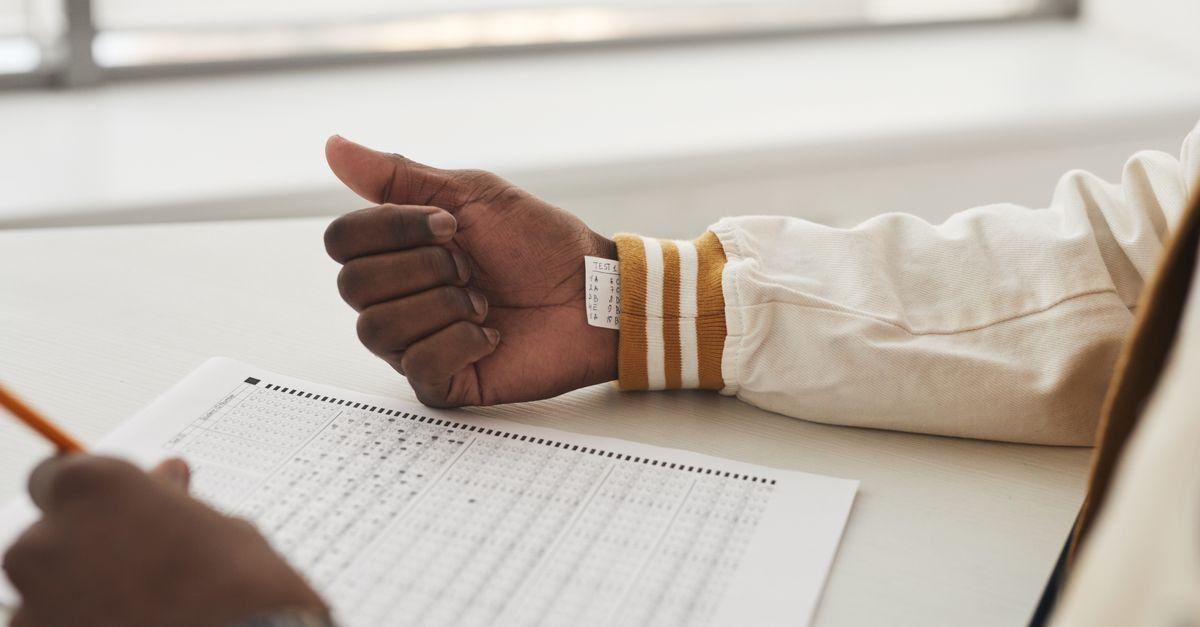
Most dMAT advice is about running out of time. Less is said about the opposite problem, which is also real: you reach the last task of a subtest, look at the on-screen timer, and find that several minutes remain. What you do with those minutes is a decision, and candidates who have never thought about it tend to do one of two unhelpful things — sit back and wait for the clock, or start re-solving everything from the beginning and talk themselves out of answers that were right. This article is about the third option: a short, deliberate routine for spare time that earns marks rather than giving them away, and a way of reading an early finish as the information it actually is.
First, read the early finish as information
The Core module is built around pace. Each of the three subtests — Figure Sequences, Mathematical Equations and Latin Squares — runs to around 20 tasks in about 25 minutes, which leaves a little over a minute per item. Finishing such a section with time left can mean one of three quite different things, and the right response depends on which.
It may simply mean that this is a subtest you are good at. If your timed practice has regularly shown you finishing Latin Squares with four minutes left, then four minutes left on the day is normal, and the routine below is all you need.
It may mean you skipped more items than usual. Skip-and-return is a sound pacing strategy, but it makes the end of a section arrive sooner. If that is the case, the spare time is not spare at all; it already has a purpose.
Or it may mean you went faster than you normally do — and speed you have not practised is usually bought with something. Most often that something is reading: an instruction skimmed, a figure rule assumed from the first two frames, a sign dropped in an equation. An unexpectedly early finish should make you a little suspicious, not relieved. The way to tell which of the three applies is your own baseline: how early do you usually finish this subtest under exam conditions? If you don't know, that is worth finding out in your next full mock.
A review routine that fits in a few minutes
The spare time is most valuable when it is spent in a fixed order rather than wherever your eye lands. A three-pass routine covers what matters and fits inside the kind of margin you are likely to have.
First, return to anything you skipped or left doubtful. These are the items where a fresh look is most likely to add a mark, because you have already judged them the hardest. Whether you can note them down depends on what your centre provides at the desk — the official rules for your sitting settle that — so if you have no paper, keep the list to two or three item numbers you can hold in your head. Work through them in order and give each one a real attempt, using elimination where the direct route is not there. Our guide to process of elimination covers how to do that quickly.
Second, if time still remains, make a mechanical check of the items you did answer. This is not re-solving. It is checking that the option selected on screen is the one you meant, that you answered the question asked rather than a neighbouring one, and that the result has the right sign or form. These are the slips our guide to avoiding careless mistakes describes, and they are the cheapest marks to recover because the thinking was already right.
Third, and only if something specific bothers you, revisit an answer on its merits. The rule from our article on changing an answer applies without modification: change for a reason you can name, not for a feeling. A spare-time review that produces several changes based on second thoughts is more likely to lower your score than raise it.
What not to do with the time
Do not re-solve the whole section from the start. Twenty items in four minutes is twelve seconds each, which is not enough to solve anything properly but is plenty of time to generate doubt. Re-solving at speed produces a second answer that is less reliable than the first, and then a dilemma about which to keep.
Do not start the next subtest in your head. The instructions for each Core subtest appear on screen when it begins, and the task types are different enough that mentally warming up for Mathematical Equations while still inside Figure Sequences helps neither.
Do not assume the time carries over. How the dMAT handles a section finished early — whether the clock runs on, whether you can move forward, and whether anything is banked for later — is set by the test interface, and you should confirm it from the official technical introduction and the instructions in your participant portal rather than from a mock platform that may behave differently. Plan for the version where every section runs to its own clock and spare minutes exist only inside the section they came from; if the format turns out to be more generous, nothing is lost.
And do not switch off entirely. A short pause to breathe and reset is genuinely useful, especially late in a long sitting. Sitting still for several minutes is something else: it drops you out of working rhythm, and the next section begins with a restart cost. If the review routine is complete and time remains, use a brief, deliberate reset and then hold your attention ready for the next instructions.
Practise the spare minutes too
Like everything else about pacing, this only works if it has been rehearsed. When you finish a timed set early in practice, do not stop the clock. Run the three-pass routine inside the remaining time, exactly as you would in the exam, and then do one extra thing while reviewing: mark which answers you changed during the review and whether each change was right. After a few mocks you will know whether your spare-time review earns marks or costs them, and the answer may differ by subtest. The setup in our guide to simulating real exam conditions gives you the framework for this, and a full timed run on the free dMAT practice test is a good place to see your natural finishing margin for each section.
The General Academic Module poses the same question at larger scale: around 90 minutes of passage-based items, where a few minutes left at the end is more likely. The same routine applies, with one adjustment — skipped items there usually mean returning to a passage, so budget for re-reading rather than expecting an instant answer.
Finishing early is neither a success nor a failure. It is a few minutes that belong to you. Decide now what they are for, and on the day you will spend them well.