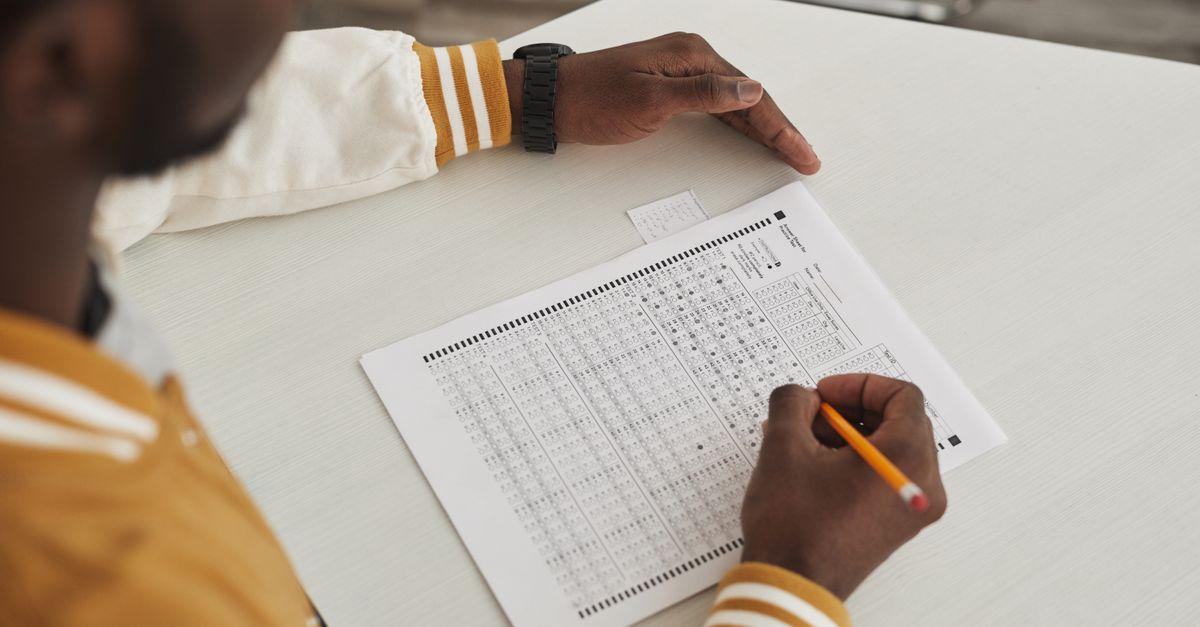
Every mock you sit during preparation has the same basic job: show you something you can act on before the next paper. The last one is different, because there is no next paper and very little time left to act. That changes what it is for, when it belongs in your calendar, and how much weight its score deserves. Treat it like any other mock and it can do real harm — a poor result four days out tempts you into a late overhaul, and a good one can make you careless. This post covers how to place your final mock, what to use it for, and how to read whatever it gives you.
Its job is rehearsal, not measurement
By the final week, a single mock cannot tell you much about your level that your earlier papers have not already shown. Scores move from paper to paper for reasons that have little to do with ability, as our post on why dMAT mock scores keep swinging explains, and one more data point on the end of that run will not settle anything. What the last mock can do well is confirm that your routine holds together from start to finish.
That makes it a systems check. You are rehearsing your timing plan for each section, the way you set up rough work, how you handle questions you decide to skip, how you use the break between modules, and how your concentration holds in the final third of the paper. If all of that runs the way you have practised it, the mock has done its job, whatever the number at the end says.
Place it with room to recover
The most common mistake is sitting the last mock too close to the exam. A full paper is tiring, and the review takes time too. Squeeze both into the last two days and you arrive at the test centre more fatigued, with a fresh score running through your head.
A sensible window is roughly four to seven days before the exam. That leaves a day to rest, a day for a short review, and a few light days of revision afterwards, which fits the tapered shape described in the final week before the dMAT. If your calendar is tight, earlier is better than later. A final mock a full week out still rehearses your routine; one the evening before mainly adds tiredness.
Within that window, set it up as close to the real day as you can:
- Sit it at the same time of day as your exam slot, starting at the same time if you know it.
- Use the official timing for each section and the break, and keep strictly to them.
- Work on a screen if you will sit the exam on a computer, with your rough paper laid out as you plan to on the day.
- Choose a paper you have not seen before, so recall does not flatter the result.
Our guide to simulating real dMAT exam conditions covers the setup in more detail.
Review it lightly and adjust only small things
The usual mock review — every error sorted, causes logged, correction tasks set for the following week — is the wrong size for the final paper. There is no following week of practice to absorb those tasks, and a long list of new weaknesses is the last thing you need four days out.
Keep the review short and practical. Mark the paper strictly, as described in how to mark a dMAT mock honestly, so that the result at least reflects what happened. Then ask a few narrow questions:
- Did my timing plan hold in every section, or did one section run over?
- Did I stick to my skip rule, or did I sink time into a question I should have left?
- Where did my concentration dip, and what did I do about it?
- Did anything about the setup, interface or break catch me out?
From the answers, choose one or two small adjustments at most — leaving a question a little sooner in one subtest, glancing at the clock at a fixed point, eating something during the break. Those are changes you can rehearse in a short practice set before the day. A new method for an entire task type is not, and adopting one this late usually costs more than it saves.
Add anything notable to your error log, but read the log for repeated habits rather than starting a new list of things to fix.
If the score surprises you
A low score on the last mock feels heavier than it is because nothing comes after it to balance it out. Before reacting, check the obvious explanations: a harder paper, a bad night's sleep, a noisy room, a section where you lost your place and never recovered. If one of those fits, the result is about the day, not your preparation. If it does not, look for the one habit that cost you most and rehearse the correction, rather than reopening whole topics. Our post on when a dMAT mock goes worse than expected walks through that sorting in more detail.
A high score deserves the same caution in the other direction. Enjoy it, then keep to the plan. The routine that produced it is what you are taking into the exam, not the number.
In either case, your best estimate of where you stand is the shape of your recent mocks taken together, not the last one alone. That is also the most honest guide to how the exam is likely to go.
A steady close
Your final mock is a dress rehearsal. Sit it four to seven days before the exam, under conditions as close to the real day as you can make them. Review it briefly, change one or two small things, and then leave it alone. If you need an unseen paper for the rehearsal, the free dMAT practice mock is a timed paper you can use, and the syllabus overview is a quick way to remind yourself what each module covers. After that, the most useful preparation left is rest.