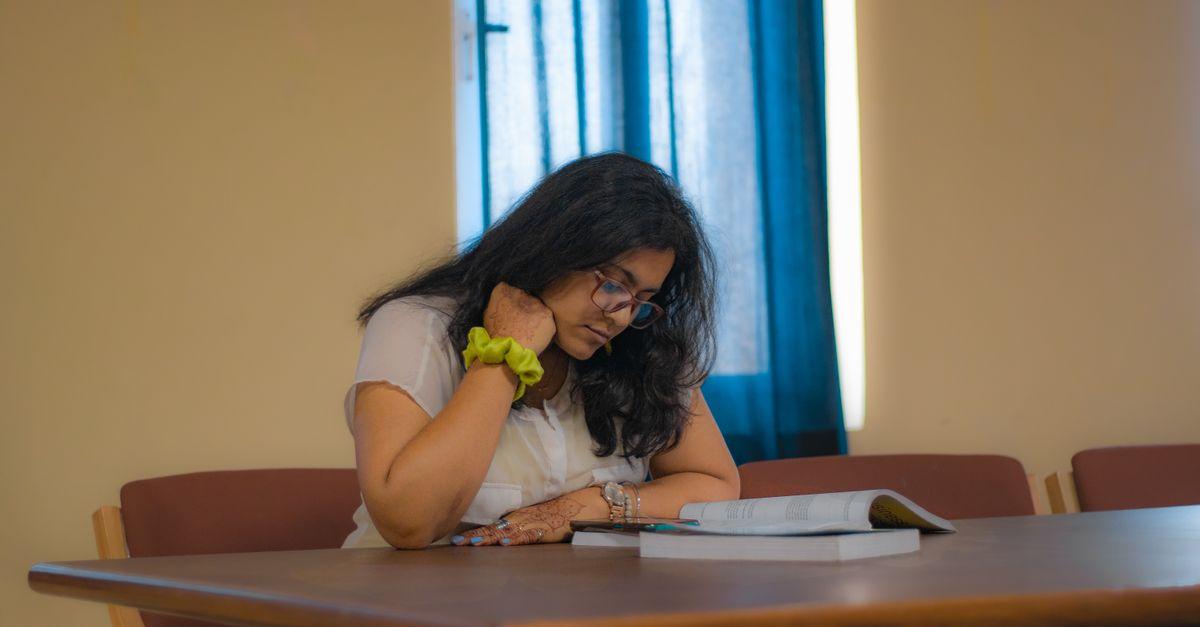
You wake up on test day and something is off. A sore throat that started yesterday, a headache that has not lifted, a stomach that is not quite settled, or three hours of sleep after a night of failing to switch off. None of this is an emergency, and you are unlikely to be the only person in the room sitting the dMAT in that state. The question is what you do with the next few hours, and most of the useful decisions are small ones. This article covers the choice to go, the adjustments worth making once you are in the room, and how to think about a result earned on a day like that.
Decide whether you are unwell or unable
The first distinction matters more than any other. On one side of the line sit a cold, a headache, period pain, an upset stomach that has settled enough for you to leave the house, and plain tiredness. On the other side sit a fever that leaves you unsteady on your feet, vomiting, a condition that could get worse in a room you cannot easily leave, or anything a doctor has told you to rest for. If you are on the far side, this is a logistics problem, and our article on not being able to sit after registering is the one to read now, including its point about getting medical documentation on the day.
If you are on the near side, the default should be to go. On the official information currently available there is one test date in the cycle, so skipping a sitting you could have managed costs far more than sitting it below your best. A test sat with a cold still produces a result. A test not sat produces a gap in your application timeline.
Make the decision once, early, and then stop revisiting it. Deciding at breakfast, again on the way, and again in the waiting area spends the attention you will need in the room.
Keep the morning familiar
Resist the urge to fix the day with something new. The morning of the exam is the wrong time to try a medicine you have never taken, a larger dose than usual of one you have, or an energy drink if you do not normally have one. Unfamiliar remedies have unfamiliar effects, and drowsiness or a racing heart in the exam room is worse than the symptom you were treating. If you have a remedy you know, take it as you normally would, timed so its effect covers the sitting. If you are unsure about any medicine, ask a pharmacist or doctor; this article is not medical advice.
Eat something plain, drink water, and leave earlier than you had planned. A rough morning makes everything slower, and arriving with time in hand removes one more source of pressure. Our test-day checklist covers what to bring. Add tissues and whatever you normally keep to hand for your symptom, and check the current rules on what may be taken to the desk before you assume anything can. The same applies to the food and drink points in our guide to rest and nutrition before the dMAT: stay with what you know.
Tell the centre staff when you arrive. Not to ask for special treatment, which they are unlikely to arrange on the day, but so that a short trip out of the room is not a surprise and there is a record. Formal arrangements have to be requested well in advance, as our article on exam adjustments explains, and a cold is not what they are for. If something happens during the test itself, the reporting route in our note on test-day disruptions applies as usual.
Adjust the plan, not the method
The way you work through items should not change. You have practised a method for each subtest, and a foggy head is the worst possible moment to improvise a new one. What changes is the pace and the margins you give yourself.
Expect reading to be slower. Tiredness and headaches hit reading speed and working memory before they hit anything else. Build that in: read the stem once, carefully, rather than twice quickly.
Lower the bar for moving on. On a normal day you might give a stubborn Latin square or a dense passage a second attempt. Today, apply the time rule you have already rehearsed and apply it a little earlier. The marks you protect at the end of the section are worth more than the one you might rescue now. Our guide to questions you cannot solve sets out the rule; today you are simply tightening it.
Write more down. Rough work exists to take load off memory, and memory is exactly what a bad night weakens. Note the intermediate value, cross out the eliminated option, mark the row you have already checked. Our article on rough work covers the habit; lean on it more than usual.
Use the break between modules for recovery, not review. Water, a few minutes with your eyes closed, fresh air if the centre allows it. Our note on the break between modules explains why review in that gap rarely helps; today it is simply a cost.
Keep the reset routine from our guide to managing test-day anxiety: hands off the mouse, a slow breath, eyes on the question stem, then one concrete step. It works for a foggy head as well as a racing one.
Reading the result afterwards
A result earned on a bad day is a real result, and a university will read it as it reads any other. It is also a data point with a known cause, and you should treat it that way when deciding what to do next. If the score lands close to your mock average, the illness cost you less than it felt like it did, and the sensible move is to use the certificate. If it lands well below, you have a clearer retake decision than most candidates ever get, because you know why. Our article on when your result differs from your mocks covers how to make that comparison honestly, and the piece on deciding whether to retake covers the rest.
What you should not do is decide the result in advance. A candidate who walks in already telling themselves the day is written off tends to stop fighting for marks partway through, and that costs more than the cold did. Sit the test as if it counts, because it does, and judge it afterwards with the score in front of you.
The short version
Decide early whether you are unwell or unable, and if you are unwell, go. Change nothing about how you work; change how much slack you give yourself. Take nothing new, tell the staff, write more down, use the break to recover, and apply your move-on rule a little sooner than usual. Afterwards, read the score as information about the test and the day together. You will not be the first person to sit this exam with a cold, and how you feel in the waiting area is not a score.